


NUT TREES
See also the nuts section of the Raraflora pageJuglans cinerea
BUTTERNUT Z3/13m
Now it's more important than ever to plant Butternut since native populations are succumbing to a blight introduced from Europe.Well suited to upland soils, this deep-rooted, medium-sized tree produces large delicious nuts that crack readily with a hammer or vice. Light, easily polished wood. Husks and inner bark produce a yellow dye.
60-80cm $12 each 3 for $30
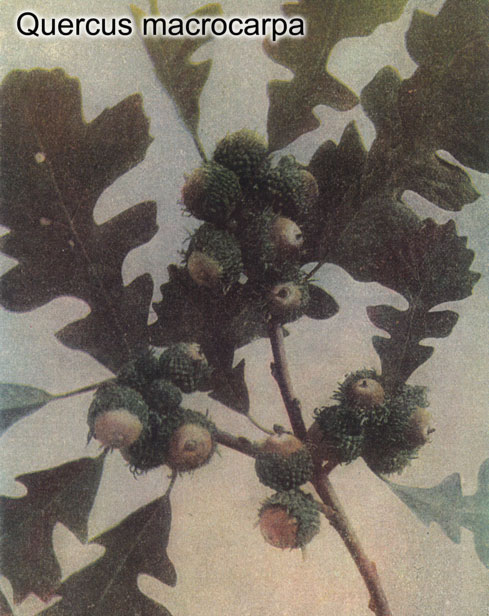 Quercus macrocarpa
BUR OAK Z2b/16m
Hardier form of White Oak. Perhaps
the largest of the original hardwoods
remaining in Eastern Canada. Tolerant
of pollution & varied soils. Survives
Maritime damp and Prairie
temperatures where its corky bark
insulates it from grass fires. Rugged
bole & convoluted limbs impart an
elemental or Old Man of the Woods
appearance.
40-80cm $10 each 5 for $30
I am inclined to envy my ancestors for their hazel nut harvest. Whole
families used to take to the woods, camping, cooking out, collecting
hessian sacks of nuts for sale to bakers.
- Ralph Whitlock, Manchester Guardian
HAZEL FILBERT Z3/3m ‡
Variously called Filbert, Hazel or Cobnut, our plants are basically the large-nutted European variety with an admixture of American and Gellatly Hazel for increased frost-hardiness. Nut production some years will be inhibited by late frosts. Though naturally shade-tolerant, Filberts in full sun produce a dark, dense, multistemmed clump: a food-laden screen. Shallow-rooted, easy to transplant & relatively uninvasive of wells and septic systems. Plant as closely as 3m apart to enhance pollination.
80-120cm $10 each 5 for $30
CHESTNUT
All Chestnuts are priced the same.
1 yr seedling 30-40 cm $8 ea 3 for $18 10+ $4 ea (any mix)
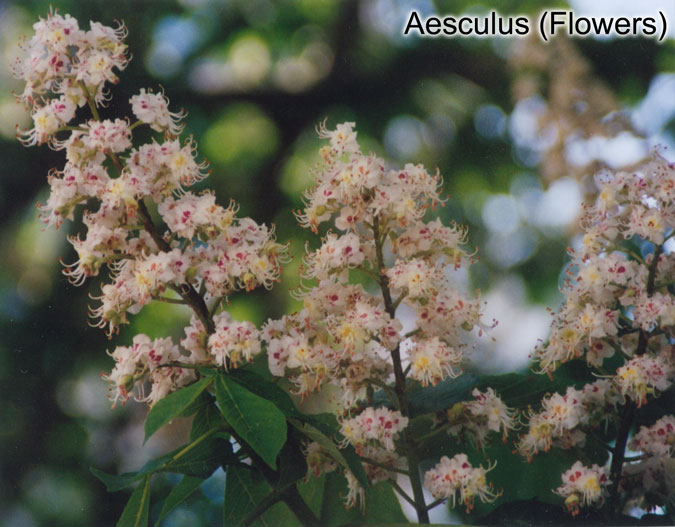 Aesculus hippocastanum
HORSE CHESTNUT Z4b/12m
Largest of our flowering trees. Its glistening 'conkers' were once fed to horses to increase their stamina. Though native to Anatolia, our seedlings come from the furthest north Horse Chestnut we know. Tall variety: Produces large candelabras of flowers every year. Outgrows southern stock.
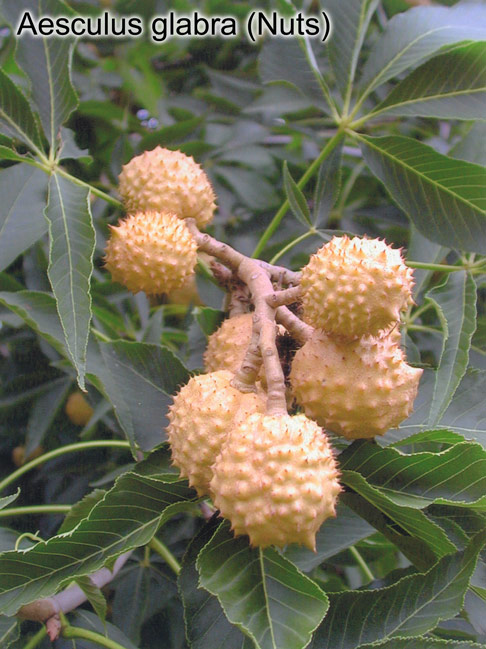 Aesculus glabra
OHIO BUCKEYE Z2b/9m
The hardiest and fastest growing of nut trees. Vigorous even on the prairies. Its dense round head gives heavy shade or screening. Large waxy buds, pale yellow flowers. Fruits early in life. Fallen Buckeyes are second only to apples as our sheep's favourite autumn food.
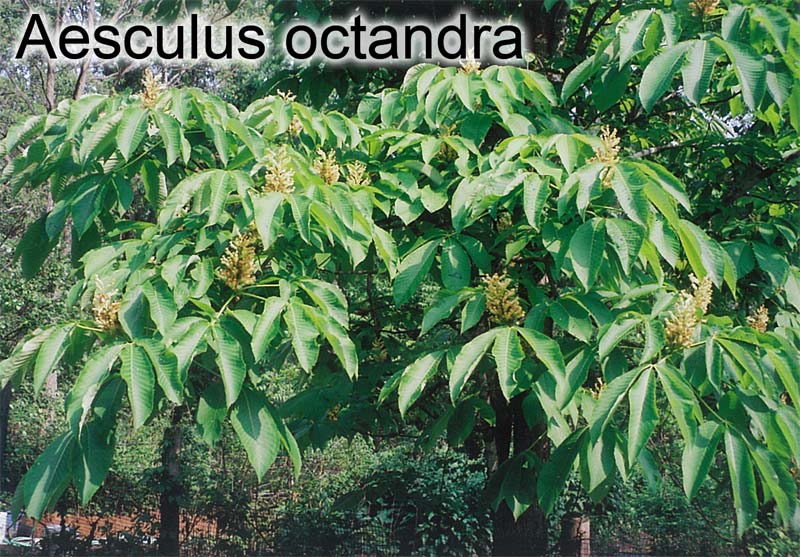
The flower candles and large drooping leaves of the stately Yellow Buckeye.
YELLOW BUCKEYE Z4b/12m
Appalachian native. Largest of the Buckeyes, the genus named for the white spot or 'deer eye' at the nut's base. Soft yet strong wood. Flowers variable, yellow to pink in big clusters. Specimens at Mt. Vernon were planted by George Washington.